
Could Advice From a US Navy SEAL Make You a Better Teacher?

“The only easy day was yesterday” – Navy SEAL motto

Photo by Pixabay on Pexels.com

A few years ago I read a book titled ‘Extreme Ownership: How U.S. Navy SEALs Lead and Win’. The book, written by former US Navy SEAL commander Jocko Willink, set out to teach leadership skills through the training and experience acquired by US Special Forces. And while it was marketed as a business book, I wondered whether his advice might help me become a better teacher.

Here are the book’s key points, written with teachers in mind:

Take responsibility for what happens [in your lessons]

As a trainee I didn’t want to take the blame for the poor behaviour that was happening in my lessons. I shied away from constructive criticism and, needless to say, did not improve as expected.

I had to learn that there was no-one else to blame for my mistakes and failures. When students weren’t behaving in my lessons, I wanted to blame them for their misbehaviour, but I see in hindsight that it was a fault of my poor classroom management. Had I admitted this, stopped making excuses and started to consistently address this weakness, the better off I would have been.

Hold [students] accountable for poor work or behaviour

As a new teacher, I didn’t enforce standards enough and I tolerated poor behaviour and insufficient effort. If homework was not done, I set a detention and moved on. But shouldn’t I have got the student to do it? To actually take responsibility for his work? Students should be guided to know where they need to improve and eventually learn to hold themselves to higher standards.

Really believe in what you’re doing

One of the biggest traps I fell into as a trainee was forgetting that I was part of something much bigger than myself. Teacher training can be a very selfish pursuit where you consider your own abilities and career above all else and this selfish attitude must have emanated from me in the classroom. My actions and words did not reflect someone who really believed in helping the students achieve what they are capable of.

In order to inspire our students, I needed to really believe that what I was teaching was worthwhile. That scholarly pursuits are achievable goals. For this reason I started making sure I knew why I was teaching particular topics. And if you’re not sure, ask your line manager: What is the reason behind this? What is the reason for having the students memorise poetry? What is the reason behind teaching Frankenstein to Year 8? They will have been implemented it as a strategy to help the students achieve so try to understand their reasoning so you can believe in it too.

Remove your personal agenda and concentrate on the mission

When I started teaching, I focused on the wrong things. Rather than concentrating on how to actually become a good teacher, I wanted to be seen as a good teacher. The difference in subtle, but important because it altered my actions. Being perceived as a good teacher meant that I hid my mistakes by blaming others. If only I had shown greater humility: admitting I was wrong and taking responsibility for my development, perhaps I would not have had to endure years that were quite as challenging.

Work as a team

One aspect of teaching that appealed to me early on was the apparent independence; just me, the subject and some students. But the reality is that you’re part of a much larger school community. The success of your students depends upon your willingness to work well with other staff members, to avoid competition with colleagues, or the temptation to portion blame when things go badly. Communicate and support one another.

Simplify complexities

When my students didn’t do a task, or did it wrongly, it was usually because they didn’t truly understand. Instructions need to be clear if your students are going to understand what you want them to do. My instructions were not always simple, clear and concise.

Whenever I’ve created opportunities for the students to ask questions to clarify what they do not understand, they have worked better. Encourage their questions and take the time to explain. Keep your lessons and your communication simple.

Prioritise

Your workload

The high workload teachers experience is frequently bemoaned, and justifiably so. Whenever I’ve tried to do everything at once, it ended badly. So when you feel overwhelmed, stay calm, see what’s most important and give that your full attention.

To help, look ahead from time to time so that you can plan for contingencies. Staying ahead of the curve can stop you from getting overwhelmed.

Your students’ tasks

Helping your students understand what should be a priority for them can make difficult tasks more manageable. If you want them to write an essay, for instance, explain that there is an order to how they should approach the task such as deciding on the over-arching argument before getting into the minutia of the ideas.

Who gets your attention

I used to try to involve myself with every student, but this is too exhausting and not sustainable. Now I just try to concentrate on those who really need it. So that you can assess where your priorities should lie, take a step back and just observe your class working from time to time.

Help [students] become more pro-active

Sometime I have a bad tendency to take too much on myself and micromanage the class.

What I’ve learnt is to inhabit the middle ground and be willing to take control when needed or to step back when appropriate. We should empower students to make better decisions for themselves by helping them understand not just what to do, but why they are doing it.

This doesn’t mean they get complete freedom. But if they feel trusted and they know what the goal is, they should feel free to make recommendations for decisions outside of their responsibility – for instance, the topics they would like to revise, or the sorts of activities they think work best for them.

Plan [your lessons]

The lesson should begin with an objective; a focused aim of what is going to be learnt. You should make it clear to the students that this is what they should learn and the purpose behind learning it so that they buy into it at the start.

That said, when planning lessons, don’t get too bogged down in detail as the students may take it somewhere even better than you had imagined. This often happens in my English lessons. I’ll plan a lesson with my interpretation of a poem in mind, only for a student to throw out an idea that is far superior.

Allow enough time for discussion, questions and clarification. Prepare for  foreseeable problems, mitigating risk, while accepting that there will always be some level of risk in lessons.

Focus on what you can control, which I’ve realised is less than I first believed. You can always adapt your lessons as you go with an internal de-brief after each. What went right and what went wrong? Then do more of what works and throw away what doesn’t.

Consider how your lessons are achieving the overall goals of the school. Is there a big push for literacy or numeracy? Extended writing? Using a word of the week? You can use these whole school initiatives to help guide your lesson planning.

Communicate

With students

Continually communicate with your students to check they understand the lesson objective and how their day-to-day work in lessons helps them to achieve the end goal.

Be calm, but not robotic. It’s okay to show emotion, but you must be able to control it. It you can’t control your emotions how can you be expected to control anything else?

Be approachable. They need to feel cared for so show confidence, but never cockiness, as this leads to complacency.

With your line manager

If you do not feel supported by your mentor or your department head, don’t blame them. It’s your responsibility to convey to them that support hasn’t been allocated. Make them aware whilst maintaining the highest professionalism.

One of the most important roles you have is to support your school leadership especially in front of students. Even if you don’t agree with their decision it is important to try to understand it and execute it as if it were your own.

Tell your department head what you’re going to do rather than asking what they think you should do. They might disagree and ask that you do something else, but part of becoming a professional is finding solutions to problems yourself.

Act decisively

There were plenty of moments when I felt afraid or uncertain which led to inaction. In times of uncertainty, it pays to act with decisiveness. There is no 100 per cent right solution because you will never have all the information. Make an educated guess and be comfortable with that.

While being a Navy SEAL and being a teacher couldn’t be more different, it seems clear to me that being successful in either field requires a somewhat comparable skillset. And not unlike The Teams, you will be more successful as a teacher once you learn to take responsibility, communicate clearly and work towards a goal that is greater than yourself.

Hooyah!

What If I Can’t Get a Class to Behave?

My teacher training made it seem like countdowns, class contracts and seating plans were the secret to good behaviour. But what if you find that none of that is working?

Photo by samer daboul on Pexels.com

Failing to manage the behaviour of a class impacted my self-esteem and my health. I was ignored, argued with, and verbally insulted. Fights broke out. Objects were thrown. Little was learnt.

I was anxious all the time, constantly worrying about school and sleeping poorly. My personal life was in tatters as I became increasingly difficult to be around. At work my colleagues regarded me as a liability. Parents (and even some students) complained about me to the Head of Department and even the Headteacher. I came very close to failing my initial training and NQT year due to my inadequate behaviour management.

I was ignored, argued with, and verbally insulted. Fights broke out. Objects were thrown. Little was learnt.

What did I do about it?

I accepted that it was (mostly) my fault

Nothing hammered this home like observing the same class with another teacher where they acted like different children. The upside to this was the realisation that the behaviour management equation was solvable. I understood that I was unlikely to struggle forever so long as I worked at it.

I persevered

Managing a class of children is a skillset which takes years to get good at so stick with it. Don’t judge yourself for not being good at it now. Who else do you know who is giving teaching a go? Probably not many. You chose to take a hard path. For that reason I liked to imagine that (in my mind at least) every lesson I taught was 1000/10.

I attended every behaviour management training I was offered

I could accept my colleagues thinking I was bad at behaviour management so long as I was seen to be trying to get better at it. I became a regular face at any CPD that was offered. Even when I had a stack of marking calling to me, even when I’d had a bad day and wasn’t in the mood. Even when the session was after school on a Friday.

I used my colleagues

I spoke to my mentor, Head of Department and the class’ Head of Year. They were all helpful. They observed my lessons and gave me helpful feedback; spoke to the students to reinforce that their behaviour was unacceptable; talked with me, putting the problem into perspective so that I didn’t just blame myself. Remember that you are part of a larger school system and ask for help where you can.

I took steps to better manage my health

I started taking regular exercise and eating healthier food. I tried to get more and better sleep. I made the time to talk to friends and family. I started trying to meditate. I watched comedies, listened to uplifting music and watched inspiring films. I read autobiographies of successful people and learnt that their lives were difficult too. I even saved the Samaritans phone number in my mobile. I got to a point where I was willing to do almost anything to safeguard my wellbeing.

I worked on having more gravitas

I reconsidered where and how I stood in the classroom, tidied up my appearance, considered my choice of words and how I spoke and developed my subject knowledge.

I found straightforward ways to recognise positive behaviour during lessons.

Two simple methods I’d recommend trying, if you haven’t already:

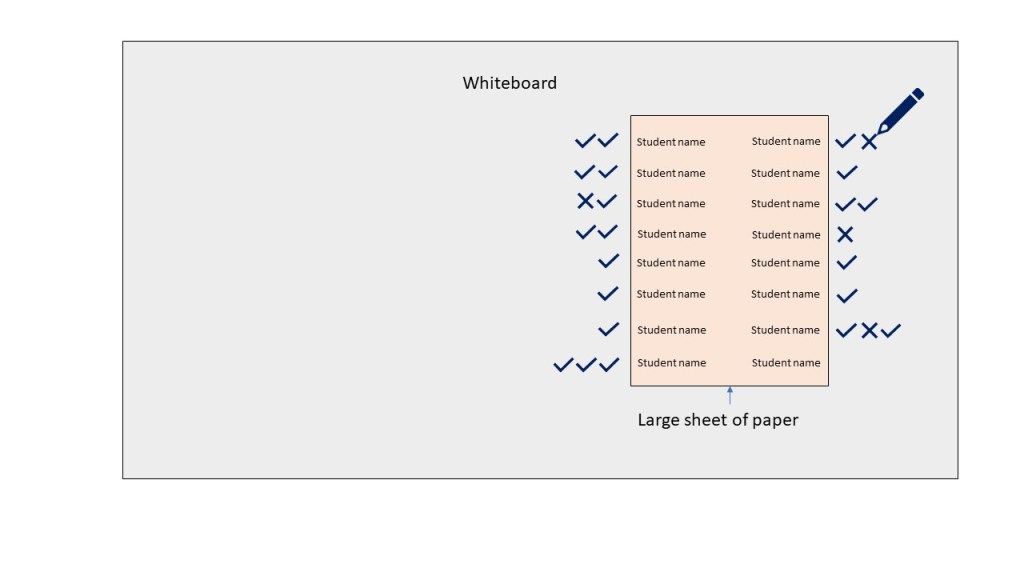
The sugar paper method – Find a large piece of sugar paper (A2 or A1 – you can ransack the Art department for this) and write the students’ names around the outside. Blue tack it on one side of the whiteboard. As the students enter the classroom, put a tick next to the name of each student who makes good choices. Reward the smallest actions: sitting in the correct seat, getting their equipment out. Soon most of the class will have one or more ticks next to their name and this will start the lesson in a positive way.

From the students’ point of view, the appeal is that you’re keeping score of their good behaviour in a way that they can see. These positive marks can then be translated into achievement points or merits (or whichever equivalent system your school’s behaviour policy uses). I usually say that three ticks equals one achievement point. You can use this to record negative behaviour too by putting a cross next to a name, but never remove a tick that has been earned.

The sugar paper method has transformed the behaviour in my lessons

Showing gratitude – Loudly thanking individuals, tables or groups for making good choices can prompt others to follow suit. Something like ‘thank you Stephen for getting started’ or ‘thank you to the back row for working in silence’. I prefer ‘thank you’ as opposed to ‘well done’ as the latter can sound patronising, particularly for older children.

What mistakes did I make?

As I gradually found solutions I realised what I was getting wrong:

Having an ‘Us versus Them’ mentality

When I was struggling to manage the behaviour of a class I felt that I was in conflict with an enemy. What I eventually realised is that we were on the same side all along. Rather than perceive the students with hostility I needed to show them that I cared.

Taking it personally

It made me angry which was understandable. Unfortunately, it also made me mean which prevented me from establishing a good rapport with students and my colleagues. Part of being a professional is learning not to take these things personally.

Trying to control students

My expectations were too high. I was never expected to control their behaviour, only manage it. I had to learn the difference between the two.

Depending solely on the behaviour policy

Issuing detentions is only part of the puzzle. I had to learn to balance sanctions with rewards as well as integrate other methods of managing behaviour into my routines.

Giving up on the behaviour policy

Just because it didn’t appear to work in the short-term, doesn’t mean I should have stopped doing it. In most schools the behaviour policy will be non-negotiable so you have to stick with it. But more importantly, being consistent in implementing the wider policies of the school shows students that you’re a part of the larger organisation, and not an individual acting alone. There’s power in that.

Every new teacher will come across a difficult class who seem to be against them from the start. And it’s going to knock your confidence. It did mine. In fact, as I’ve outlined above, it did even worse than that. But I’m a better teacher now because of them and, with time, you will be too.

Best of luck for the lessons ahead.

The Five Best Ways to Spend Your Half-Term Break

Some activities those new to teaching should make a priority

Photo by Simon Migaj on Pexels.com

If you’re anything like me, you’ve been counting down the days and you can’t quite believe it’s finally here: half-term.

For teachers and students alike, no two sweeter words have ever been uttered. You’ve been slogging away for weeks and now all of a sudden… (for one week) you don’t have to.

How should you spend all the free time stretching out before you? Whichever way you see fit, of course. But here are my favourite ways of getting the most out of the half-term break:

Spend time with friends and family

I don’t often see the people I love most during term time. There is something about the momentum of the work week that means I rarely make them a priority (sorry Mum!). Even when I do, I find it hard to relax having just got off work the day before or knowing that I have work the next day. A whole week off allows me to properly relax so that I can truly enjoy the people in my life.

Keep a routine

I used to stay up late at night and then sleep through the mornings, but found this made it much harder to get back into the sleep routine needed for school. And then I found that once the routine of sleep goes, anything goes: junk food, alcohol, lazing around in pyjamas all day, browsing the web obsessively. To keep the good habits I’ve built up over the term, I try to go to bed at a reasonable time and set an alarm for the morning.

I will also make a quick plan of what to do each day, starting with the most important task in the morning. There will also be some non-negotiables, such as twenty minutes of exercise, ten pages of a book read or a meal cooked from scratch. Such ‘high-quality leisure’ prevents me from falling into the time sink of checking social media, web browsing or streaming entertainment for hours each day.

Exercise

I have found that one unfortunate consequence of abundant free time is that it can bring about periods of neuroticism. I find myself beginning to wonder whether teaching really was the best choice of career; or what my colleagues might think of me; or what was I thinking making that joke in front of the headteacher. A jog around the park or a 20-minute HIIT workout keeps those thoughts at bay and makes my time off more joyful.

Read

Read whatever feels important to you. Really good non-fiction has helped me to see the unseen; ideas which I hadn’t previously considered. I like to read around a topic I might be teaching next half-term or a book that could help me address weaknesses in my teaching practice. For example, I’ve been struggling with behaviour in some classes so I intend to read ‘Running the Room’ by Tom Bennett. Recently I finished reading ‘Never Split the Difference’ by Chris Voss who, as a former FBI negotiator, offers fascinating insights into effective verbal communication; some of which I’m excited to try out in the classroom.

Think ahead

Towards the end of the break I like to undertake some light tasks that will make the start of next half term feel a little less jarring. And I don’t mean plan next week’s lessons. Instead, perhaps I’ll get a haircut or make sure my clothes are clean and ironed. Anything that will help me hit the ground running on Monday morning.

It has taken me years to use my half-term break in a way that leaves me feeling refreshed and excited about the half term ahead. Just one of the ideas above could make a big impact on helping you enjoy yours. That said, don’t judge yourself too harshly. However you spend your well-deserved time off, enjoy it.

Personally, I’ll begin by taking some deep breaths and letting the fact sink in.

It’s finally here: half term.

3 Ways to Communicate Better with Parents

Photo by fauxels on Pexels.com

Occasionally you will need to meet face-to-face with the parent of a student you teach. Never is this so they can congratulate you on a job well done (at least not in my experience). Instead, there will probably have been some sort of incident, usually behavioural, that hasn’t been resolved over the phone.

Understandably, this can feel emotionally and politically risky; what if they think you’re a fraud; what if they demand your resignation; or what if they lose their temper?

Here are some ways I’ve since learnt to communicate better in person with parents.

“The single biggest problem with communication is the illusion that it has taken place”

George Bernard Shaw

1. Make it safe

For honest dialogue to take place, parents must feel comfortable speaking up so they can say anything. Signs that parents do not feel safe are if they have resorted to either silence (avoiding the conversation, criticising you behind your back, use of sarcasm, cruel humour or giving evil looks) or violence (anger and other high emotions). Ask yourself: does this parent believe I respect them? If not, here are two ways you can make the conversation safer:

  • Apologise if you have done something wrong

‘I’m sorry I… __________’ or ‘I apologise for… _________’ etc. Be careful of ‘I’m sorry that you think…’ as this is not a true apology.

  • Use contrasting to make yourself clear

Contrasting is a don’t/do statement. For example, ‘[Don’t] The last thing I want to want to do is… ____________. [Do] I actually think…__________.’

2. Tell the truth

For a productive conversation to take place, all the relevant information needs to be on the table. If you withhold what you want to say, you will make stupid decisions. I used to tell myself that I had to choose between keeping the peace and telling the truth, but over the years I’ve learnt that, had I spoken up, there would have been a better outcome.

3. Have the right motive

Often when faced with strong pressure and high emotion I would lose sight of our goal and instead look for ways to punish, avoid embarrassment, win an argument or keep the peace. Instead I needed to know what I wanted from the conversation and concentrate on that. Ask yourself: What do I really want for myself? What do I really want for others? What do I really want for the relationship? If your goal is shared then you both have a reason for staying civil. Remind yourself that you share more in common than you do in difference. Staying focused on the needs of the parent will help you avoid a useless and heated conversation that doesn’t lead to change. To establish a mutual purpose:

Suspend the belief that your choice is the best and only solution. If you find yourself arguing say, ‘It seems like we’re trying to force our view on each other. I would like to find a solution that satisfies us both.’

Uncover their true purpose. Ask, ‘What is your reasons for wanting that?’ You might find that their strategy is masking a goal which is compatible with yours. Finding something you share, no matter how small, can produce a lot of shared benefit.

Aim for progress. It’s unlikely both of you will get exactly what you want, so rather than aiming for perfection, aim to get a little closer to a shared goal.

Master your emotions. If you can’t control your emotions, matters will only get worse. Fortunately, we have more control over our emotions that one might think. Before we feel an emotion we automatically tell ourselves a story to add meaning to what we’ve just observed. It’s our interpretation of a fact, explaining what we see and hear. What we need to do is change the story we tell. Here’s how:

  • Notice your behaviour. Are you in some form of silence or violence?
  • Get in touch with your feelings. What emotion is causing you to feel this way?
  • Analyse your story. What story are you telling yourself that creates these emotions? Are you actually a victim? Is the other person genuinely a villain? Do you truly find yourself in a helpless situation? There’s a high chance that the answer to all of these is no and they’re about to lead you to an unhealthy action.
  • Go back to the facts. What have you seen or heard to make you tell yourself this story? Could there be another story that makes the other person seem more reasonable?
  • Tell the rest of the story. Openly and honestly discuss the problem instead.

In Summary:

1. Tell the truth

What you have to say is important.

2. Make it safe

Apologise: ‘I’m sorry I…_________’ / ‘I apologise for…________.’

Make yourself clear: ‘The last thing I want to want to do is…______. I actually think…____.’

3. Have the right motive

Listen to what they want: ‘It seems like we’re trying to force our view on each other. I would like to find a solution that satisfies us both.’

Discover their real purpose for wanting it: ‘What’s your reason for wanting that?’

Manage your emotions by sticking to facts and not stories.

How to Manage Your Mood in an Instant

Grace under pressure

Photo by Ekrulila on Pexels.com

All ships have a ballast, a weight in the bottom of the hull which gives the ship an even keel during stormy weather. Your emotional ballast is the true understanding you have of yourself, your ability to recognise thoughts and feelings as they happen.

When I started teaching I thought I had a good idea of who I was. But it soon became apparent that I’d never truly been tested under pressure. When times were hard I didn’t have an even emotional ballast and so I would get angry and want to give up.

Here are some ways that I have developed a better understanding of what’s going on in my body in order to establish a better emotional ballast:

Pay attention to your inner compass

The Roman orator Cicero once wrote, ‘we must decide who we want to be, what kind of people, in what walks of life, know our particular genius and what we are good and bad at and behave accordingly.’ Put another way, we must direct ourselves toward what matters, understand our skills and find the right home for them in the world. We can do that by becoming aware of what we do, what we feel and what we think.

Do

Be present to your physicality as much as your thinking. There are three ways you could do this:

  • Root yourself to the spot

Imagine you have tree roots planting you to the floor. The stillest person in the room often exudes the most gravitas so abandon yourself to gravity and the support it provides. The stress of the classroom will take you out of your body and put you into your head, causing you to hunch-up and tense your muscles. The technique of putting your Feet On the Floor and your Bum On a Chair (FOFBOC) is a great way of getting out of your head and back into your body. Feel the weight of your feet on the floor and your bum on the chair (this also works by thinking just of your feet if you’re standing). You should feel safe and supported by gravity so relax into this contact.

  • Become aware of your breath

Notice the expansion and contraction of your diaphragm as you breathe. We breathe automatically, but we can also breathe consciously, deciding to breathe in and out or even hold our breath if we choose. Breathing consciously can develop new neural pathways in the brain which will help you to have greater awareness of other automatic processes in the mind, such as your emotions. A great way to do this is with meditation. I personally use the Headspace app which is free for teachers.

  • Imagine you have a dragon’s tail

As silly as this sounds, thinking you have a heavy tail at the base of your spine gives you a feeling of weight. Picture your tail coiling through the room to feel like you own the space.

Feel

Find your true north, your ‘this is me’ feeling. This means paying attention to what matters to you and what motivates you because when you’re doing these, you feel like you’re doing what you were meant to do: your purpose.

Whenever you find yourself getting off track, you can use this feeling to guide you back to where you need to be. So tune into your values. When you follow them you’ll feel good and going against them will make you feel bad. You can tune into this by considering what you’re grateful for at the end of each day.

Think

We create our world largely by how we think about it. Roman Emperor, Marcus Aurelius, wrote that ‘the soul becomes dyed with the colour of its thoughts’. Moving away from destructive thinking to constructive thinking is key to having a more positive outlook

Notice the voices in your head. Young children often express these voices aloud as they chatter to themselves, but as we grow up we learn to keep them to ourselves. There are two distinct voices:

Your inner coach

This is the voice in your head which calms and celebrates. Say something kind to yourself, some positive advice. Turn it up when you feel down.

Your inner critic

This is the voice in your head which does refinement. It helps you to step up and improve so you don’t repeat your mistakes. Learn to turn the volume down because if it’s too clear it will raise your anxiety levels and cause stress. Use it to make yourself better, not worse. Refine when you listen to it and what it says. If it’s saying ‘You fool. You really messed that lesson up. They’re going to hate you’, train it to say: ‘That didn’t go well, but don’t worry. You’ll do better next time’

Pull them together

If, for example, you’re worried that you’re bad at behaviour management and your inner critic says ‘you can’t control a class’, change it into an ‘If…’ question. So it might say ‘If you could control the class, what would you do differently?’ Then the answer might be: ‘I’d be more relaxed and we’d get through more of the lesson.’ Listen to this answer because if you were more relaxed and you got through more of the lesson, behaviour might improve.

If your critic says ‘You’re never going to figure this out’ talk back to it with your coach. ‘What if you do? You’ve managed other classes well before.’