
What Does it Mean When a Student says ‘No’?

‘No’ doesn’t always mean no
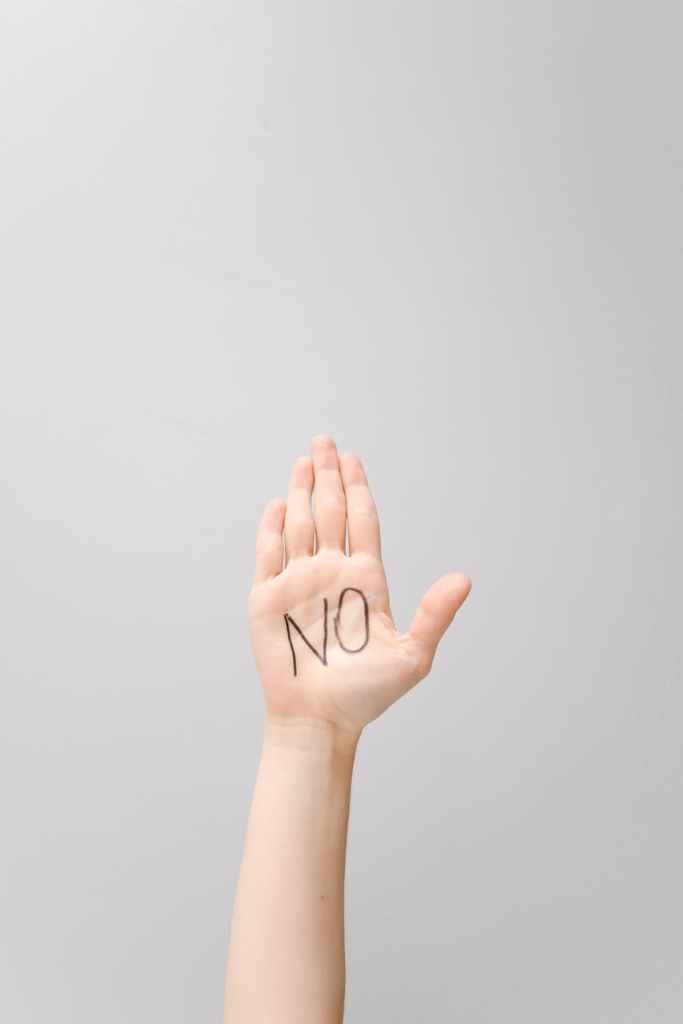
Photo by Polina Tankilevitch on Pexels.com

I’m sure you’ll have met a challenging student who has announced a defiant ‘no’ at some point in your lesson:

Do you understand the task?

‘No!’

Have you finished copying the title and date?

‘Nope!’

‘This is interesting, isn’t it?’

‘Ha! No!’

Whenever I had a student respond to me like this I’d panic, see them as stubborn or unreasonable and walk away with the consolation that I’d try again next lesson.

Growing up I had been taught that being nice was the key to building relationships. So in the classroom, being ‘nice’ meant being polite enough in order to not cause conflict. In my mind that meant saying ‘yes’. How was I supposed to engage with students who told me ‘no’?

This belief turned out to be death in the classroom because by ignoring their ‘no’ I actually wasn’t figuring out the students’ needs. It put them on edge and made them skittish around me.

I was only able to move my relationship with these students forward once I realised what ‘no’ actually meant. It wasn’t the student telling me go away, it was the opposite. The student was not ending the conversation, nor were they being stubborn.

On the contrary, saying ‘no’ to me showed they were listening and engaged with what I was asking. By responding in the negative they were establishing a boundary to feel safe. For a teacher they were right where I wanted them to be.

Whenever I demanded that a student get on task (or else!), they persisted in their standoff.

But ‘No’ gave them pause to really look at my proposal. And it gave me time to offer solutions:

Do you understand the task?

‘No!’

(Oh, what do you not understand?)

Have you finished copying the title and date?

‘Nope!’

(Oh, where are you up to?)

‘This is interesting, isn’t it?’

‘Ha! No!’

(Oh, what do you not like about it?)

I’ve started to take this one step further in lessons; asking questions with the intention of eliciting a ‘no’ response. ‘Have you given up?’ is now my favourite ‘no’-oriented question to ask when a student appears to have downed tools because after saying ‘no’ it asks the student to define their position, whilst giving them the space to safe, secure and in control of their decisions.

These days, when a student tells me ‘no’, I don’t walk away. And sometimes I don’t have to say anything at all before their ‘no’ is followed by: ‘Sir, I’m just not sure how to do it.’

What I Wear to School

When considering suitable workwear, there are some practical decisions to be made…

Photo by Pixabay on Pexels.com

When I landed my first teaching job, I rushed out to a local department store to buy what I thought was ‘suitable business attire’. But the humble off-the-peg suit I came home with ended up being a dreadful choice.

Despite trying it on under the gaze of a sales assistant, it didn’t quite fit properly – the trousers were too short and the jacket was too big. I looked and felt like a child trying on his father’s work clothes.

Made out of a double-digit percentage of polyester, I was sweaty and itchy in warm weather, yet oddly cold in the winter.

It was ‘dry-clean only’ which meant the regular expense of getting it cleaned. There were also days spent without the suit while it was at the drycleaners which were only ever open during school hours.

Not to mention the price – one suit jacket and matching pair of trousers cost nearly two hundred pounds; a painful sum to part with on my modest salary.

After that first year, I hung up the fateful suit choosing to adopt a preferable range of garments. I humbly present to you my daily outfit for school in 2020:

Cotton vest and shirt
Cotton is cool in the summer and warm in the winter
Woollen blazer
The wool naturally repels moisture and stains
Chino trousers
A pair of chino trousers are some of the most inexpensive clothing items a man can buy
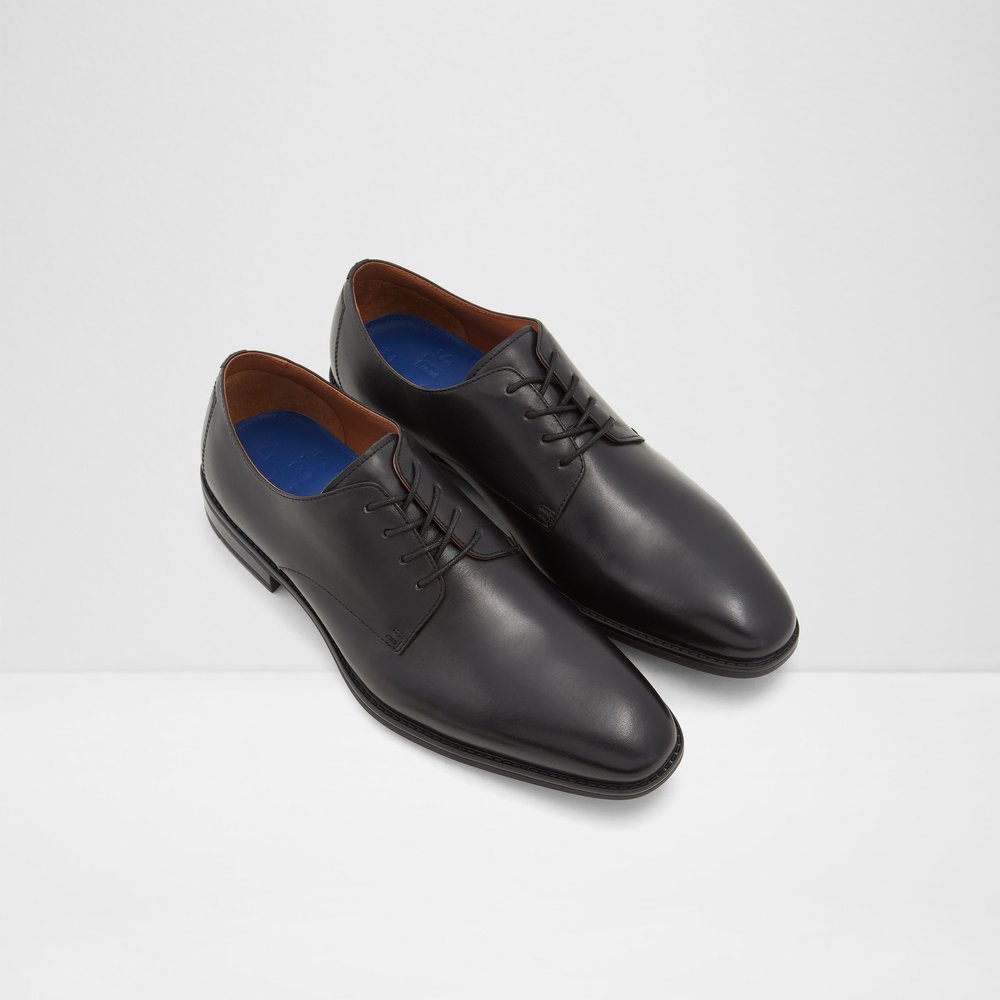
Leather shoes
Waterproof and durable

This is not a blog about fashion. Full disclosure: I am not a fashionista and know next to nothing about how to dress well (just ask my wife). So how is this outfit, on at least a practical level, good for a teacher?

Consistency

I have neither the time nor the energy to sit around deciding what to wear each morning. To reduce this so-called ‘decision-making fatigue’, I wear pretty much the same outfit Monday through Friday. I wake up, shower and put it on without any thought. Don’t worry, the shirt, pants and socks change daily, but I’ll keep the same blazer and trousers each day, washing the trousers at the weekend.

Comfort

Cotton is cool and breathable in the summer and warm in the winter. It dries quickly for those moments when you get stuck on break duty in the rain.

As teachers we are very mobile around the classroom. A shirt which is long enough to achieve a deep tuck will prevent it spilling out every few minutes as you move about during the day.

Get trousers that fit you in the waist and leg. Nobody loses gravitas like a man constantly fiddling with his waistband and I can’t afford to look any more of a clown than I already do.

Durability

I wear the same black leather shoes every day. I polish them probably once a month (not every week – sorry Dad!). Once a year I get them re-heeled and re-soled, but they have withstood a lot of use and turned out to be great value for money.

The wool in the blazer naturally repels moisture and stains.

Cotton can be washed, dried and ironed quickly.

Affordability

A pair of chino trousers are some of the most inexpensive clothing items a man can buy. A quick search of the M&S website at the time of writing shows that chino trousers start at £19.50 and go up to a ‘premium’ of £45. Gap, Uniqlo, River Island (to name but a few) also sell inexpensive quality chinos.

My woollen blazer was relatively expensive (around £100), but since I wear it every day it cost feels justified.

Practicality

Dry cleaning is expensive and inconvenient, (not to mention bad for the environment) so buy clothes you can wash yourself at home.

Pockets should not be underestimated. I’ve found that I use my blazer as a quickdraw holster for board markers.

The cotton vest is primarily for warmth and comfort. It also helps absorb sweat to stop staining under the armpits of your shirt.

The black leather shoes are waterproof and durable.

Everyone will choose a work outfit for different reasons. If I had to guess, I’d say the clothes we wear are often more of an emotional response than the cold logic of practicality I’ve described above.

Whatever you choose to wear to school, considering these five qualities shouldn’t lead you too far wrong – at the very least, they’ve kept me warm, dry and comfortable.

But what have I missed? Is there anything else you consider important when shopping for work clothes? Let me know in the comments below.

How to Craft a Bulletproof Email to Parents

Here is an email template to use when writing to parents about bad behaviour

Photo by cottonbro on Pexels.com

Having to tell a parent that their child hasn’t behaved in a lesson can be tricky. The parent fears your judgement of their child-rearing and you fear their judgement of your skills as a teacher. It’s a powder keg of emotions waiting to go off.

Over the years I’ve developed a tried-and-tested email that is clear, honest and practical. It gets the detention set-up without hurting anyone’s feelings.

Here is an example of the email (all names are fictional):

Dear Mrs Johnson,

This is Mr Smith, James’ English teacher.

I’m afraid that James was caught talking repeatedly during a silent writing task in our lesson this morning. He had been warned to stop, but persisted.

As a consequence for disrupting the task, James will, with your permission, have a detention after school for 30 minutes on Monday 19th October.

Please let me know if James will be unable to attend.

Kind regards,

Mr Smith

I believe this email works because it does the following:

Uses names

Opening with the parent’s name shows that you’ve taken the time to write to them specifically. It implies that you are personally invested in them and their child. In comparison, an email beginning ‘Dear parent’ followed by ‘your son’ sounds so impersonal it wouldn’t surprise me if the email gets ignored, or worse, provokes a hostile response.

Commiserates

Opening the body of the email with ‘I’m afraid…’ or ‘Unfortunately…’ suggests that you had better expectations for their child and expresses your disappointment in a way that is conflict averse.

Sticks to the facts  

State clearly what you saw, heard and did as these an undeniable. Speculating on why they might have behaved in this way or any other interpretation of the facts is beside the point so there’s no need to dilute your message with it.

Asks for permission

Sneaking this into the middle of the sentence requests permission for the detention without explicitly asking for it. In doing this, the parent will feel that they are being included as part of the behaviour management process rather than being dictated to. Often a parent will reply with an enthusiastic ‘you have my permission’ in response.

Plans ahead

Sometimes there will be a good reason for the student to need to reschedule a detention.  Mentioning that the student might not be able to attend prompts the parent to check their diary and let you know of any possible clashes.

So, if you like the sound of this email, and wish to use the template yourself, here it is:

Dear Mr/Mrs/Ms/Miss/Dr [Surname],

This is [Your Name], [student’s name]’s [subject] teacher.

I’m afraid that [student name] [description of behaviour + when it happened].

As a consequence for [behaviour], [student name] will, with your permission, have a detention after school for [length of detention] on [date of detention].

Please let me know if [student name] will be unable to attend.

Kind regards,

[Your name]

While writing emails is not rocket science, your choice of words really do matter. And if, like me, you find yourself writing lots of these emails, having a template to copy and paste can be a great timesaver – just don’t do what I once did and forget to change the names!

6 Items I Carry on Me at All Times

What should you have to hand?

Photo by Tim Gouw on Pexels.com

If you were to peer into my classroom a few years ago you’d more than likely see me patting down pockets, rummaging through desk drawers or tipping out my rucksack.

My first few years of teaching were a series of hard lessons in getting caught short.

Here are the items I now won’t walk into a classroom without:

Water bottle

If, like in my school, the nearest water fountain is a few minutes’ walk away, it will often be a few minutes you won’t be able to spare. Dehydration adds to feelings of stress, so come prepared.

Tissues

Nothing derails a lesson quite like a student with a runny nose. Having a pack of tissues on you fixes this quickly. I’ve also found this to be a great relationship builder as your generosity will help build good relationships with your students.

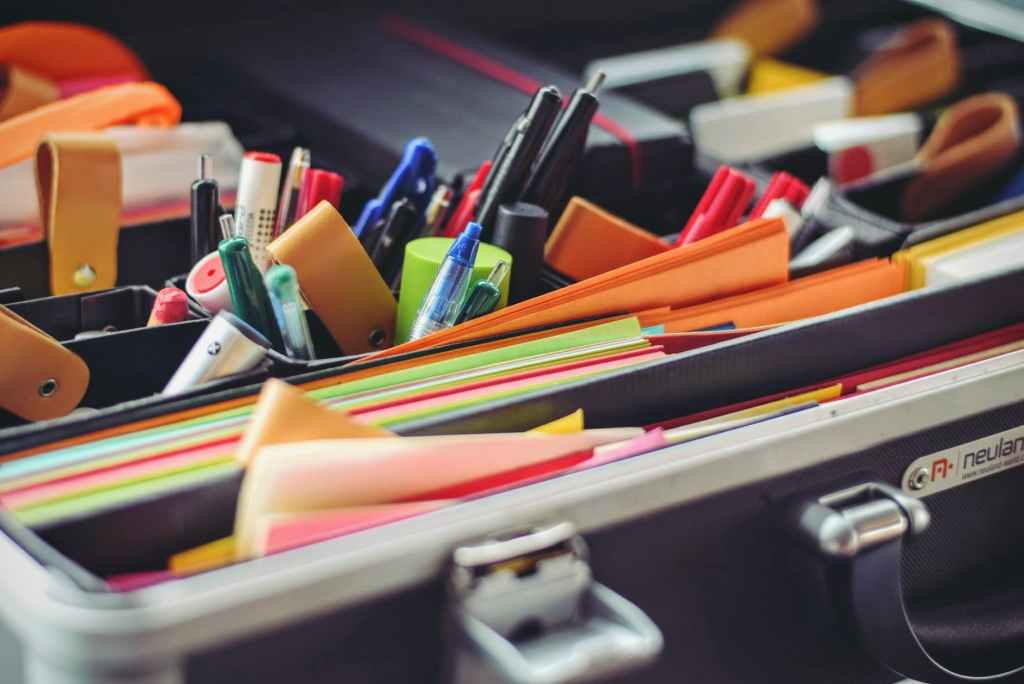
Spare paper and pens

Being able to quickly toss a pen or sheet of paper to a student who has arrived unprepared can save a lot of fuss at the start of a lesson. Very handy for yourself too.

Fresh boardmarker

There’s nothing worse than trying to write on a whiteboard with a boardmarker that’s on its last legs. Have a spare.

USB stick

I keep mine on a keyring attached to my school lanyard.  I find it reassuring to have every lesson slide I’ve ever made hanging around my neck.

Make sure to back-up any files on a spare drive at least once a month in case your USB stick gets lost or damaged. After breaking several plastic ones, I now use a metal USB stick for better durability.

Presentation clicker

The ability to stand anywhere in the classroom and switch between slides remotely has given me greater sense of control than being tied to a keyboard or mouse. Most presentation clickers have built-in laser pointers which I find is really useful for directing the students’ attention to particular words or images.

So long as I have these with me, I don’t want for much else. But what do you think I’ve missed? Is there anything else you find yourself reaching for several times a day? Let me know in the comments below.

Six Routes to a Planned Lesson

Where do lessons come from?

Photo by Andrea Piacquadio on Pexels.com

The sun sets on yet another day of teaching and you’re settling down to plan tomorrow’s lessons. You know what you’re going to teach and you already have a lesson planned, ready and raring to go.

And while I’m sure that might be true for some, in my experience, there are five likelier routes to deciding what comes out of your classroom’s projector the next day:

Teach them something they don’t seem to yet understand

You might have recently marked their work and noticed where a lot of the students were going wrong. Or perhaps you assessed their understanding of a topic verbally in your last lesson. You know there’s something they don’t quite yet understand, and you now get to help them understand it better. These lessons can be magic because the students know that you’ve made the effort to figure out what they need help with and you’re taking the time to help them get better at it. Most of the time I find I get better than average behaviour in these lessons as a nice added bonus.

Ask a colleague for a lesson

I wish I had done this more when I started teaching. I suppose I didn’t want to be perceived as lazy, or as someone trying to take advantage of a colleague. But so long as you don’t do this too often, there’s nothing wrong with asking a more experienced teacher to share a lesson with you. Whenever I’ve been asked, I was flattered to think they would want to use a lesson I’d planned.

Make the lesson your own though. Understand the material you’re going to teach. Know what is on each slide without having to read off of it. Nothing made my students switch off more than watching me try to figure out the lesson as I went along.

Dust off an old lesson

If you’re already a year or two into your teaching career, there’s a good chance that you will have previously taught a lesson to this year group about this time last year.

I usually find that the lessons I taught the year before aren’t up to the standard I’d expect of myself now. A great measure of your progress is to look back and laugh at lessons you taught a year or two ago! But there will be a skeleton you can develop with a little time and effort.

And the good news is that a lesson planned today is a lesson you can use again in the future.

Download a lesson

The internet is great for getting topic ideas or for finding different approaches to teaching, but the quality of resources you’ll find varies greatly. Any lessons you find online need to be viewed through a critical eye (just because it’s online, doesn’t mean it’s good). And as with a lesson you might get from a colleague, or one you planned last year, I would never use it without reviewing and adapting it first.

Many sites like TES or Teachit charge for some of their resources. Buying a set of lessons, or even a whole scheme of work, can save you a lot of time, but there’s a value judgement you’ll need to make about the time you save versus the amount you’ll pay. I’ve only opened my wallet for resources a couple of times over the years, but I have colleagues who do so regularly and swear by it.

Plan a lesson from scratch

While starting from a blank page will require the greatest investment of your time, it can also be the most rewarding – especially when it goes down well. Plus there’s always the additional feeling of pride you get from creating something out of nothing.

I have found that I teach these lessons the best. Maybe it’s because they come from the heart. Or perhaps I’ve invested time in their creation and so I really sell it to the students. Since I know the topic and tasks inside out it gives my teaching added gravitas.

And if the lesson turn out to be good and you’re proud of it, why not share it with your colleagues? If you’re lucky, they’ll share theirs with you too.

That’s it; the six routes I take to a planned lesson. Feel free to let me know in the comments which of these routes you use the most, or of any other routes I’ve neglected to mention. I’d love to hear from you.

Like this? Download the flowchart